
Analysts are of the view that long-term investors could continue to hold the stock, irrespective of the MSCI development.
HDFC Bank on Wednesday reported a 2.3 per cent year-on-year rise in its consolidated net profit to Rs 17,657 crore for the October-December quarter, restricted by slower loan growth. On a standalone basis, the largest private sector lender's net profit came at Rs 16,735.50 crore for the period, up from Rs 16,372.54 crore in the year-ago period, but marginally down from the preceding quarter's Rs 16,820.97 crore.
The country's largest private sector lender HDFC Bank on Saturday said it will grow its loan book slower than the industry in the current financial year (FY25). The move comes as the lender looks to bring down its elevated credit - deposit (CD) ratio to pre-merger levels. "We will bring down the CD ratio faster than what we had anticipated.

Some of the leading life insurance companies have reported a sharp decline in the number of lives covered in FY25, largely due to a slowdown in credit-linked life insurance policies. Stress in the microfinance segment has reduced loan disbursements and, in turn, the flow of new customers to insurers.

For over a decade, HDFC Bank consistently outperformed industry growth rates in both deposits and advances, maintaining impeccable asset quality. Amid a landscape where other banks struggled with soaring non-performing assets (NPAs), HDFC Bank thrived, eventually surpassing ICICI Bank to become the largest private sector lender in India. Its net interest margin (NIM) remained stable in the range of 4.1-4.4 per cent.
In the quarter gone by (Q3 of FY22), private lender HDFC Bank issued around 950,000 credit cards, its highest ever credit card issuance in any single quarter. Since the Reserve Bank of India (RBI) revoked the embargo on it in August 2021 to issue new credit cards, the lender has issued 1.37 million credit cards. This is according to a senior bank executive, who was present in an analysts' call after the lender's Q3 earnings. In Q3, we achieved the highest ever issuance, with 950,000 card issuances.

The pickup was driven partly by fresh corporate investment but more by higher working-capital demand.
Bank credit growth is expected to moderate this financial year after a robust 16 per cent estimated for last financial year, driven by strong economic activity and retail credit demand. There are three reasons for this: a statistical high-base effect given the strong growth seen last financial year, revision in risk weights by the Reserve Bank of India (RBI), and relatively slower economic activity.

'Do exhaustive research and then select the one that best fits your budget and requirements.'

Credit card spending in September recorded strong growth of 25 per cent year-on-year (Y-o-Y), marking the highest increase in six months. Even as many banks saw higher slippages during the July-September quarter of 2024-25, spending growth exceeded 20 per cent for the first time since February. According to the latest data released by the Reserve Bank of India (RBI), September spending reached Rs 1.76 trillion, compared to Rs 1.42 trillion in the same period a year ago. In August 2024, credit card spending was Rs 1.68 trillion.
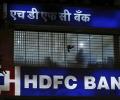
As many as 140 million customers of HDFC Bank and Axis Bank are expected to face interruption in banking services in the weekend due to the former's system upgrade and the transition of Citi India business to the latter. Both the banks have notified their customers about the interruption in services. HDFC Bank - the country's largest private sector lender with 93.2 million customers - had announced that it will undertake a system upgrade on July 13, wherein it will migrate its core banking system (CBS) to a new engineered platform to enhance customer experience.

India Inc, which is sitting on cash balances of 13.5 trillion, is using the funds to meet capital expenditure as well as brownfield expansion, resulting in 'anaemic' demand for bank loans, State Bank of India (SBI) chairman CS Setty said at an event on Monday. He added that a slowdown in corporate credit is mainly due to lack of demand.
'Credit card debt comes with high interest cost and stringent penalties.' 'If you do not repay on time, the costs balloon.'
Looking to regain lost ground in the credit cards segment, HDFC Bank on Monday announced a tie-up with leading payments company Paytm to start selling co-branded plastics before the onset of the festive season. The credit cards will be powered by Visa and will include offerings targeted at millennials, business owners and merchants, an official statement said. Paytm has a reach of over 330 million consumers and 21 million merchants, while HDFC Bank has over 5 million debit, credit and prepaid cards, and serves 2 million merchants through its offerings.

Credit card spending reached Rs 2 trillion in October, a 14.5 per cent rise from September, largely driven by festival season purchases. However, the volume of outstanding credit cards increased only marginally during the same period. The spike in spending comes at a time when nearly all major credit card issuers are calibrating their growth in the segment due to visible signs of stress.
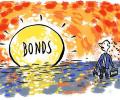
India's corporate bond market, driven by public sector undertaking (PSU) banks and financial institutions last year, is losing momentum since the second quarter of FY26.

'A credit line on UPI is going to make banks think about credit fundamentally as they digitise the credit process entirely.'
The uncertain macroeconomic environment may have prompted HDFC Bank to go slow on expanding its credit card portfolio.
While HDFC Bank has vowed to recoup its lost market share in the credit card segment in three to four quarters by aggressively sourcing new cards, brokerages believe it is a little hard to come by, given how competitive the landscape has become, with other players in the market becoming equally aggressive to gain market share. Kotak Institutional Equities in its report on Monday said, "We would like to believe that the recovery in market share is likely to be gradual, if any. "All the key players, including Axis Bank, are now willing to expand their credit card portfolios as they have tested quite well against Covid-19."

Major credit issuers, including the largest - HDFC Bank - have integrated their systems with the Bharat Bill Payment Systems (BBPS) for receiving credit card repayments via third-party applications.

Some of the key names include: Maruti, M&M, Ashok Leyland, Britannia, Ultratech, JK Cement, Havells, Voltas, Amber, Metro, Trent, LemonTree, Indian Hotels, Niva Bupa, HDFC Life, IGL, Acme Solar, Suzlon, Swiggy, Delhivery, ICICI Bank, HDFC Bank, Bajaj Finance, Shriram Finance," according to a report by Motilal Oswal Financial Services.
Eight months after barring the country's largest private sector lender HDFC Bank from selling new credit cards, the Reserve Bank of India (RBI) has lifted the ban, banking sources said on Tuesday. However, the ban on launching new technology initiatives remains, the sources said. In December last year, the RBI had come out with an unprecedented

HDFC Bank on Monday said it aims to regain the two per cent market share in the credit card market it ceded to rivals during a recent ban, within a year by aggressively tapping into its existing depositor base. The bank will also focus on forging new partnerships to sell more cards and will not deviate from its conservative approach on taking credit risks as it goes aggressive in the market, its group head for payments and consumer finance, digital banking and IT, Parag Rao, told reporters. On August 17, RBI lifted the ban on HDFC Bank which had prevented it from issuing new credit cards from December 2020.

Murders disguised as accidents. In one horrifying case, a man insured his father, mother, and wife -- then allegedly killed them all. He claimed Rs 54 crore in insurance.

Shares of state-owned bank stocks were under pressure on Monday due to muted deposit and credit growth numbers reported by these lenders in the October-December quarter (Q3) of 2024-25 (FY25). The Nifty PSU Bank index was down 4 per cent, with Union Bank of India emerging as the biggest loser as its shares fell 7.5 per cent to close at Rs 114.7, followed by a 5.7 per cent drop in shares of Bank of Baroda (BoB) to Rs 228 and a 4.7 per cent slide in shares of Bank of India to Rs 99.8 on the National Stock Exchange.

New investors should not allow themselves to fall prey to FOMO and rush headlong into gold.
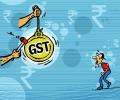
HDFC Life Insurance Company on Thursday said it has received GST demand orders of over Rs 27 crore for alleged short payment of taxes. In two separate regulatory filings, the insurer said it has received tax demand orders of over Rs 16.5 crore and Rs 10.5 crore from authorities for alleged short payment of GST and input tax credit claim mismatch.
HDFC Bank's market capitalisation (market cap) touched Rs 13 trillion in Thursday's (December 28, 2023) intra-day trades as the largest private sector lender is set to report its sharpest monthly rally in the past two years. At 10:33 AM; HDFC Bank's market cap stood at Rs 13.03 trillion, the BSE data shows. The stock was up 1 per cent at Rs 1,717.90 in intra-day trades on December 29, inching towards its record high of Rs 1,757.80 touched on July 3, 2023.
The Reserve Bank of India (RBI) has given HDFC Bank six months to migrate HDFC's home loan customers to external benchmark linked lending rate (EBLR), top sources in the bank told Business Standard. Almost half of HDFC's 5.4 million customers are home loan customers. It is mandatory for banks to link retail loans and loans to micro, medium and small enterprises to an external benchmark. Non-banking financial companies do not have such a mandate.

Indian corporate are increasingly shifting away from bank funding towards alternative sources, such as equity and bond markets, as their deleveraged balance sheets have improved their ability to raise equity at better valuations. Moreover, the 100 basis points (bps) rate cut by the Reserve Bank of India (RBI) has enabled them to access long-term funds from the debt capital market at cheaper rates.
In a mixed bag for HDFC Bank ahead of the parent HDFC's merger with itself, the Reserve Bank of India has declined to make exceptions on certain aspects, and has offered some leeway on others. The country's largest private sector lender, which is aiming to conclude the merger with the home finance major by July, had written to the central bank seeking certain forbearances after announcing the $40-billion merger in April last year. In an exchange filing this evening, HDFC Bank said it received a response from RBI on Thursday and also said that there are a few pending issues.
The card offers special features like multiple reward points, weekend bonanza points, petrol surcharge waiver and 500 special gift reward points to be credited annually on the Teachers day, HDFC Bank said in a statement.

With rising credit demand, cleaner balance sheets, and renewed investor confidence, banks are positioned at the forefront of the market rally. From major players like ICICI and HDFC to broader policy shifts, there's much driving this momentum.
With rising credit demand, cleaner balance sheets, and renewed investor confidence, banks are positioned at the forefront of the market rally. From major players like ICICI and HDFC to broader policy shifts, there's much driving this momentum.
With rising credit demand, cleaner balance sheets, and renewed investor confidence, banks are positioned at the forefront of the market rally. From major players like ICICI and HDFC to broader policy shifts, there's much driving this momentum.

Some of the fintechs that will get impacted include Cred, Paytm, Phonepe and Amazon Pay, among others.

Non-banking financial company (NBFC) Tata Capital is set to launch its much-anticipated $2 billion (Rs 17,200 crore) initial public offering (IPO) in the week beginning September 22, market sources familiar with the matter said on Sunday. The issue is expected to value the company around $11 billion, they added. Tata Capital is likely to make its stock market debut by September 30.

Last fortnight, State Bank of India Chairman C S Setty lifted the veil on a subject long spoken of in corporate corridors: Why can't our banks finance mergers and acquisitions (M&As)? Change is in the air: Indian Banks' Association (of which Setty is the chairman) is to "make a formal request" to Mint Road to make way for it. Thus far the exclusive turf of foreign banks even though its funding remains offshore - as in, it's not on these entities rupee-book (and a few select shadow banks) - a most lucrative segment in the investment banking suite, M&As, will be homeward-bound.

A day after the Reserve Bank of India (RBI) lifted its ban on HDFC Bank on issuing new credit cards, the country's largest private sector lender on Wednesday said it had resources and plans in place to "further reinforce pole position in the credit card segment" and that it would "come back with a bang". "We will aggressively go to the market, with not just our existing suite of credit cards but also new offerings in the form of co-brands and partnerships," Sashidhar Jagdishan, managing director and chief executive officer of HDFC Bank, said in a letter to his employees. The bank's management had earlier indicated that the lender had been sourcing liability customers aggressively over the past few months.
Private sector lender HDFC Bank on Thursday said the Reserve Bank of India (RBI) has asked it temporarily stop all launches of its upcoming digital business-generating activities and sourcing of new credit card customers after outage at its data centre which impacted operations last month.
